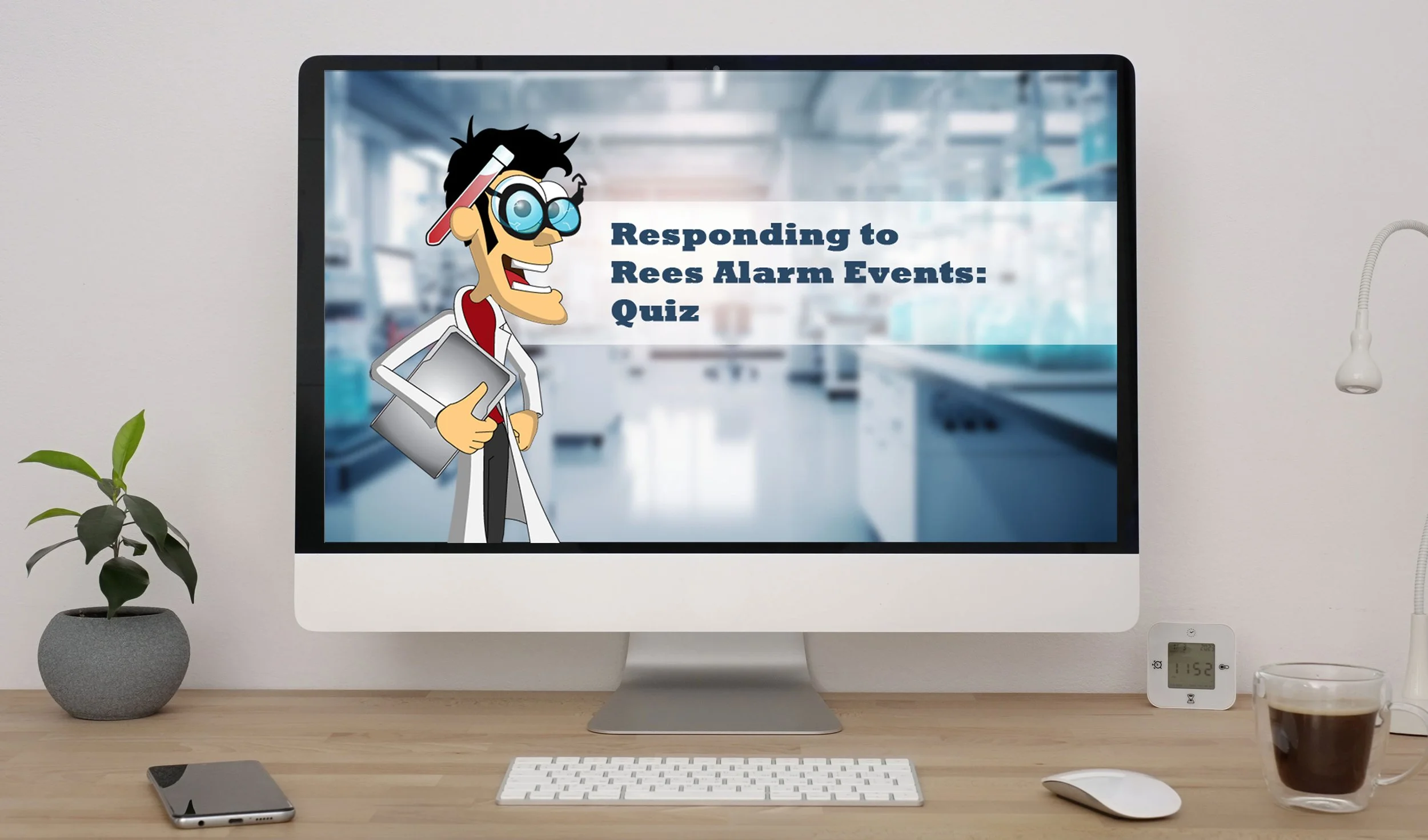
Audience: Blood service workers that have full access to the Rees System.
Responsibilities: Instructional Design (ADDIE, gap analysis, collaboration with stakeholders and SMEs, action mapping, storyboarding), eLearning design and development (design mockups, prototyping, building, iterating).
Tools Used: Captivate, Adobe Illustrator, Photoshop, Maya.
Responding to a Rees Alarm Event
Do you have what it takes to respond to a Rees alarm and save lives?
Hospitals depend on blood products to save patient lives which are stored for emergencies. The Rees Monitoring System is designed to alert blood services workers when storge equipment temperatures approach unsafe levels, but do the workers really know their stuff?
This scenario-based course is designed to allow them to prove they are proficient in responding to Rees alarm events.
The Problem
This client stores blood products that are used for blood transfusions. These products are stored in refrigerators and freezers depending on the product. The storage equipment is monitored by the Rees System which initiates an alarm even that calls workers to handle the issue before the products go bad. The workers were training on how to handle these alarms, but the alarms happen so randomly that when they occur, the workers had a hard time remembering how to handle the alarm. When blood products are compromised, it costs the company tens of thousands to hundreds of thousands of dollars in lost revenue and can also cause shortages in blood products that hospitals depend on to save lives. (A refrigerator unit holds 420 whole blood units. The cost of each unit ranges from $104 - $313. If a storage unit is compromised, the company could lose around $43,680 on the low end and $131,670 on the high end.)
As we analyzed the situation, we saw that the workers were receiving training, but it was difficult for them to set up fake alarm events to allow workers to actually practice going through an alarm event or even using the Rees System. The training was not enough or frequent enough for them to retain the information.
The Solution
After talking with stakeholders, I recommended building virtual eLearning scenarios. This would allow workers to not only practice responding to Rees alarm events, but we could also document they were proficient in these skills through our LMS. The goal was to make sure new workers were well trained when hired and current workers were retrained each year to keep this information fresh in their minds. Doing this would prepare workers to take action confidently when an alarm event occurred.
The Process
I used the ADDIE model through the life of the project as well as using the Backwards model as part of the analysis phase to make sure we were designing with the end goal in mind, which was to have employees respond effectively and lower the failed Rees alarm events to as close to 0% as possible. This involved mapping out actions that workers need to accomplish to effectively respond to a Rees alarm event.
I mapped key actions during the analysis phase, designed a script and simple storyboard, and then created visual mockups and an interactive prototype during development. Each step kept the solution focused on the learners’ needs, making it engaging, relevant, and as realistic as possible; all the while keeping the key actions and end goals in mind.
Action Map
The action map highlighted five key actions: effectively answering a Rees phone call, locating the alarming equipment in Rees, investigating the alarming equipment, determining conditions of the product, and properly documenting and reporting. These actions were prioritized because they directly address the root causes of how alarm responses fail. Highlighting them helped keep the training focused on actions that would lead to success.

Storyboard/Mood Board
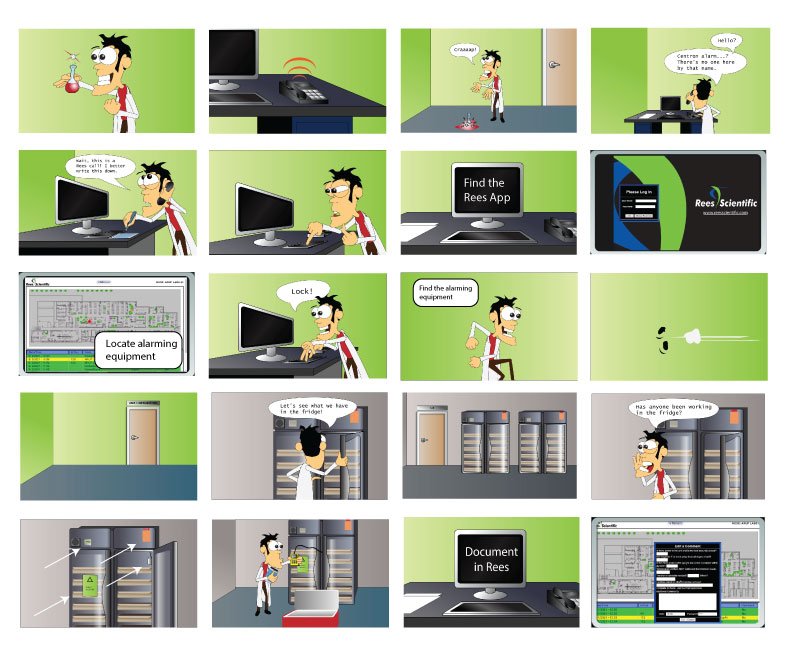
The storyboard served as a blueprint for mapping out each scenario, choice, and consequence. I used the actions identified in the action map to guide the design of realistic scenarios. These scenarios allowed learners to experience the impact of their decisions, provide opportunities to give feedback, and move on to the next scenario. We ended up designing a scenario for the new hire course and a scenario for the retraining course that would be given each year. Both trainings had different scenarios to test the learner actions.
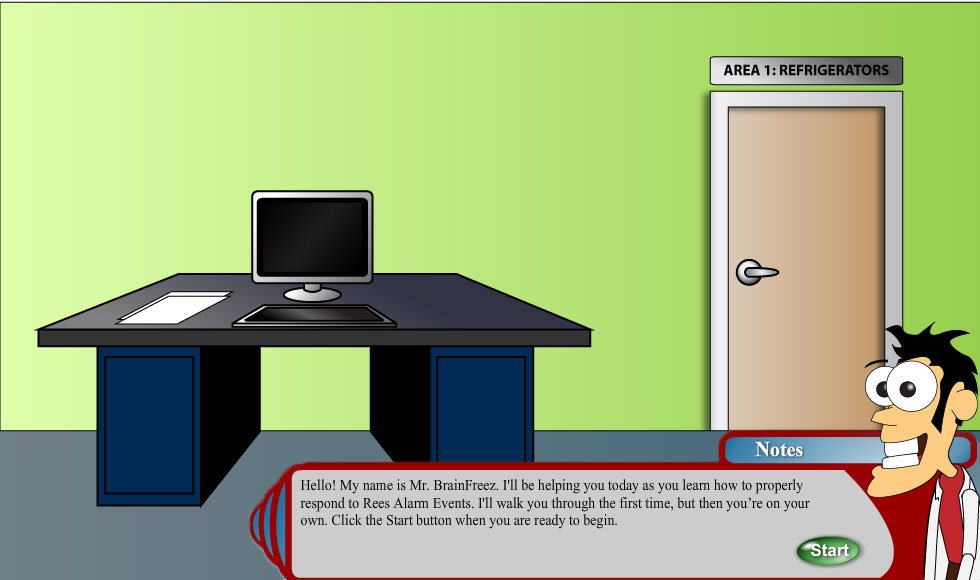
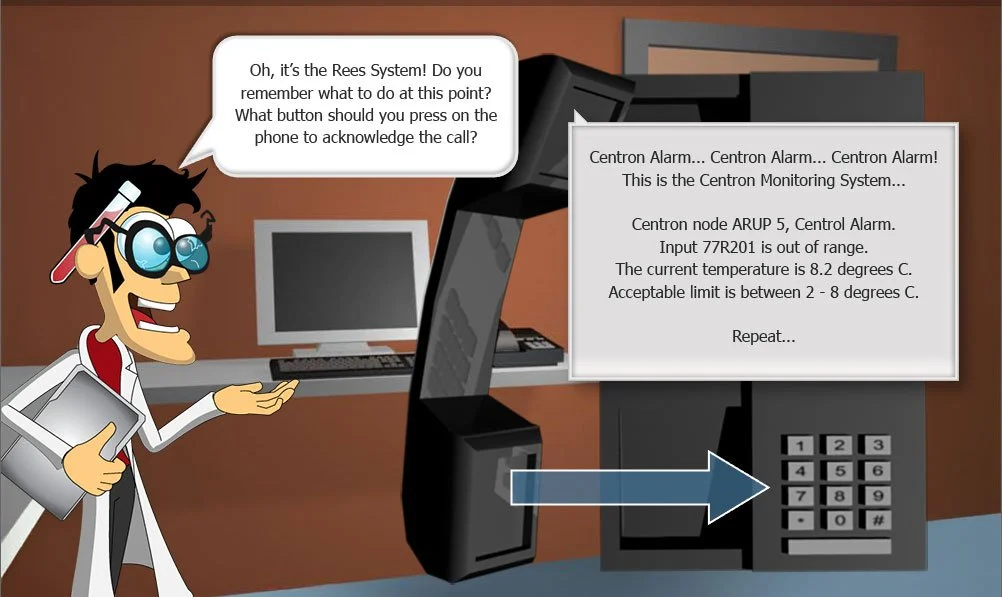
To support learners, I introduced a mentor character who provided a human connection yet added the fun aspect of a cartoon character. He would provide guidance without interrupting the experience. These notes ensured the final product remained engaging, consistent, and easy to navigate.
Interactive Prototype
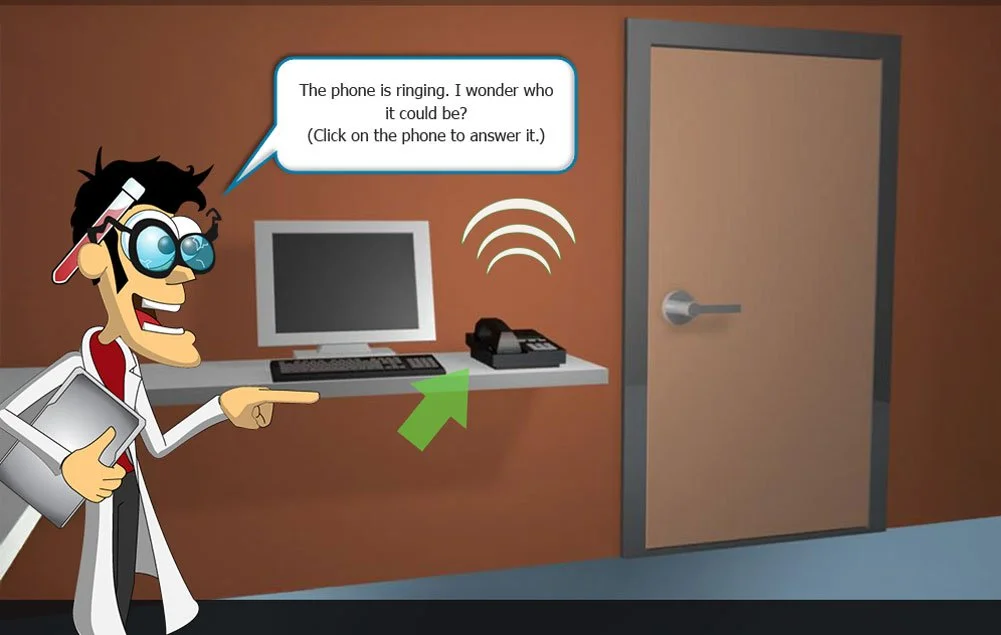
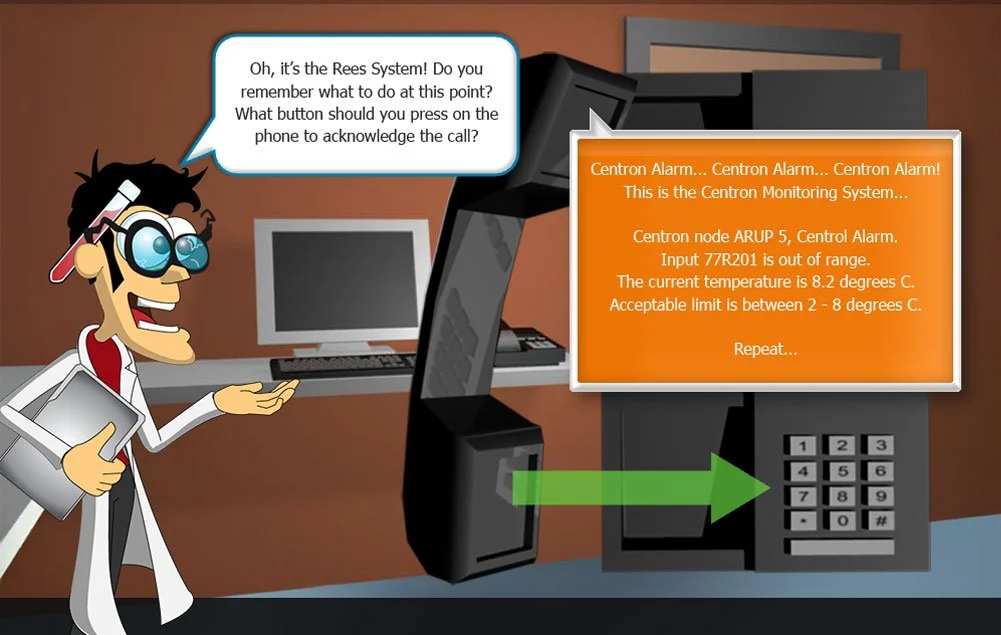
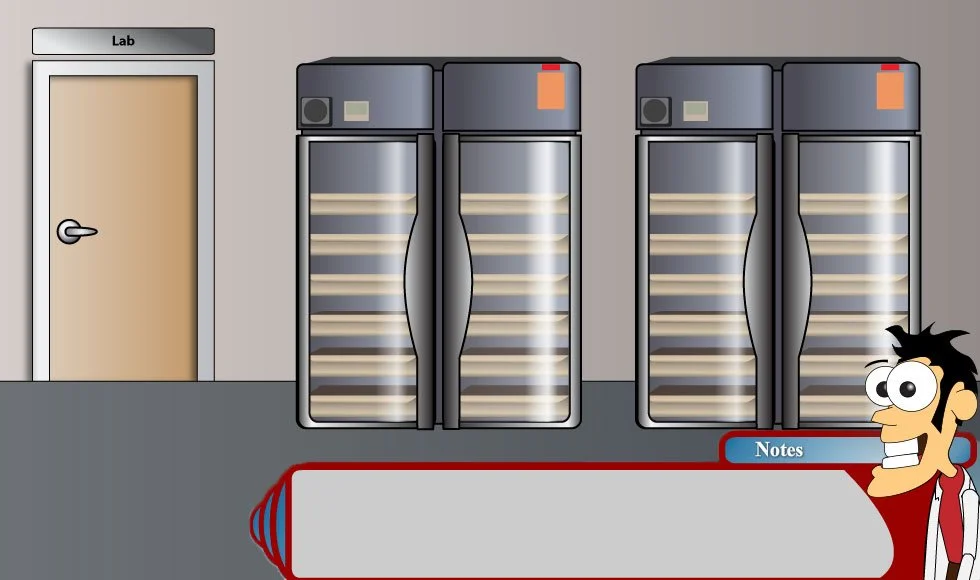
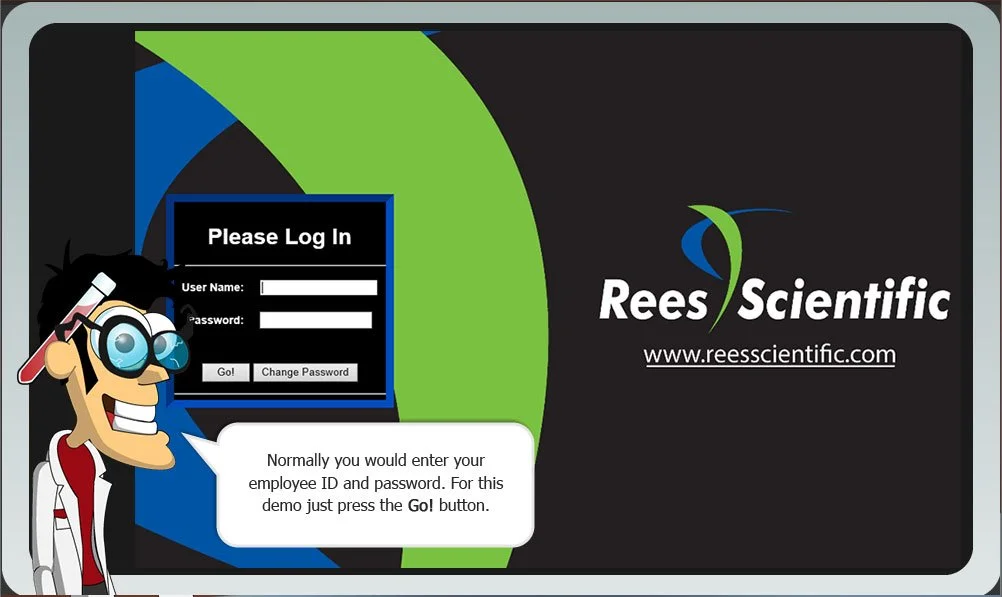
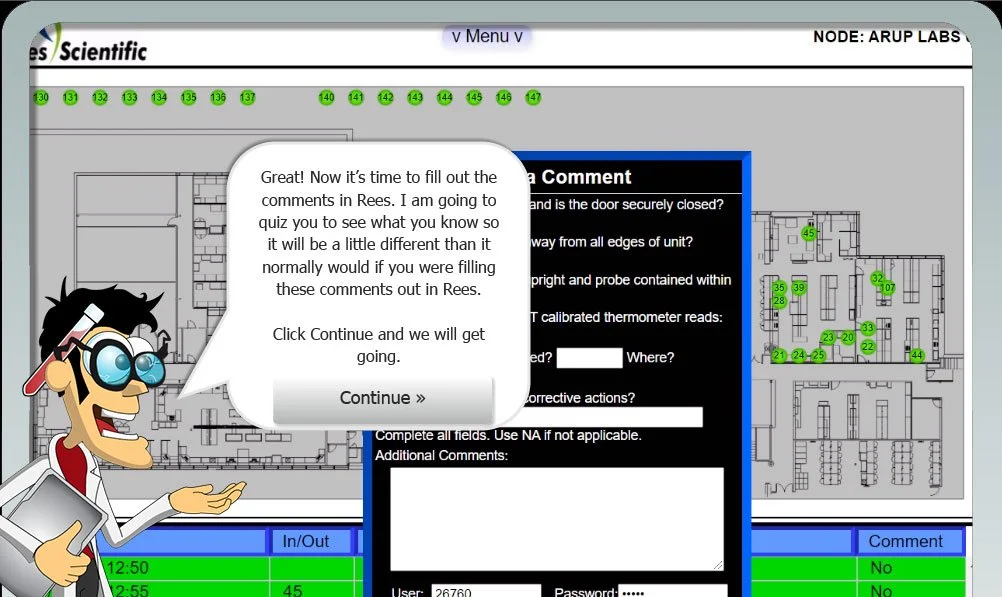
I built an interactive prototype in Captivate to test the flow and functionality of the eLearning experience. The prototype included several interactive slides and the first scenario questions to gather feedback and refine the design.
Full Development
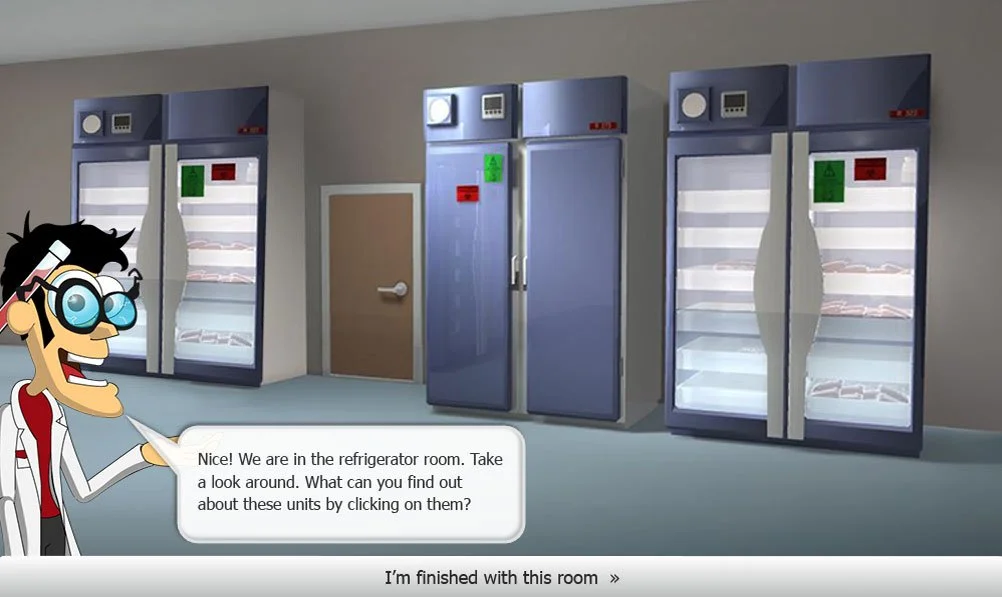
After applying feedback, I developed the final product with realistic scenarios, clear choices, and mentor guidance to support decision-making. I designed two courses, one for new hires and the other for an annual retraining to keep the information fresh.
Beta Testing & Refinement
I conducted user testing with employees that hadn’t seen the project to gather feedback on the experience. Based on this feedback, I made iterative improvements, such as refining slide transitions, color choices to better match the real lab and refrigerator rooms, and removing distracting elements to keep it clean and focused.
Results
Each year I evaluate the effectiveness of this training by applying the Kirkpatrick Model and iterating according to my findings.
Level 1: Reaction — Gathering feedback from learners about their experience through our LMS.
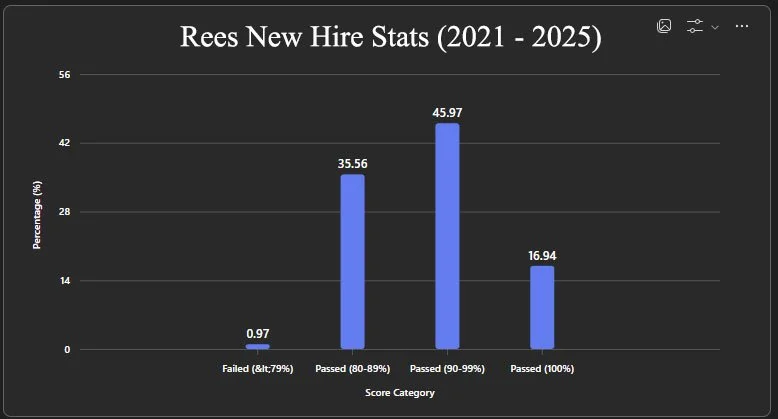
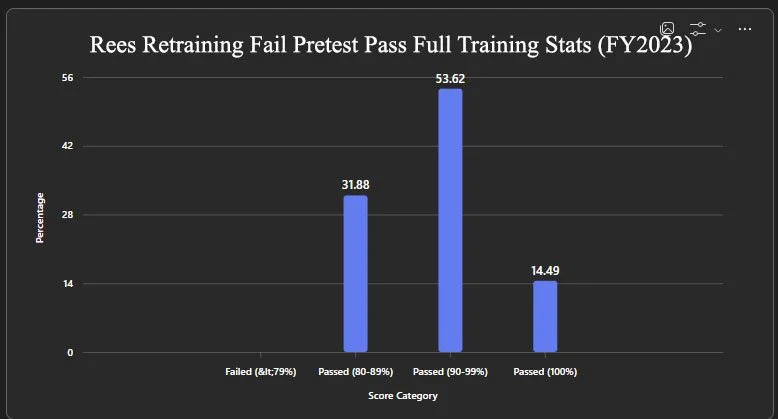
Level 2: Learning — Running statistics on how effective workers are handling the Rees alarm events in the course after they complete the instructional course. Below are score stats, but I also look at data showing how users are responding to each question in the scenario to determine future improvements.
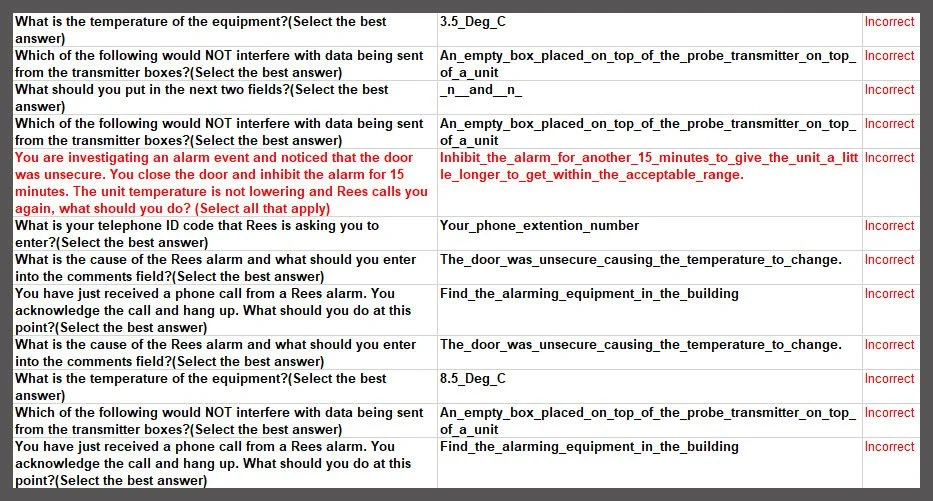
The following data is a representation of the scores and example incorrect responses that are evaluated. The Rees New Hire course is their initial introduction to handling Rees alarms. There is also an annual Rees retraining course to keep the training fresh and document proficiency.
Level 3: Behavior — Gathering feedback from leaders on how well workers are responding to alarm events in real life.
Level 4: Results — This client has been very happy with this course. New hire training and retraining success rates are high and the stakeholders have noticed significant improvements in the handling of Rees alarm events. Failure to respond to Rees alarm events have dropped to 0% (this is due to a focused group effort, but this course did influence this). According to our stakeholders, Rees alarm events are being handled appropriately the majority of the time.
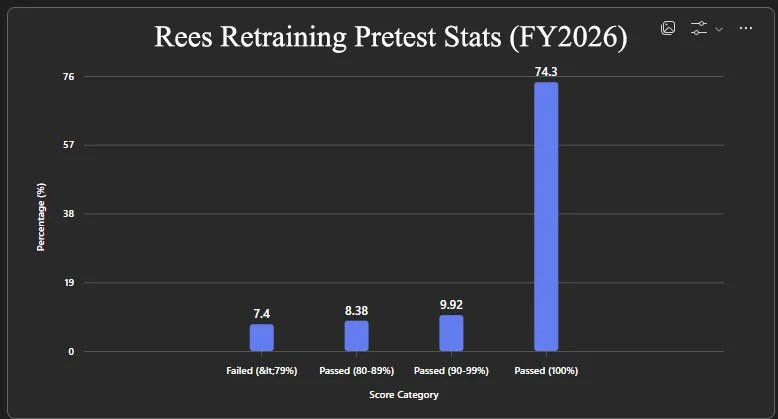
According to recent retraining numbers:
74.3% of workers are highly proficient
9.92% are right behind them scoring above 90
8.38% passed with a score of 80 - 89
7.4% of works failed their first attempt scoring less than 79.
Conclusion
One of the key things I’ve enjoyed about this project is being able to create immersive, real-world scenarios that allow learners to practice decision-making in a safe environment. I’ve seen this project have real impact helping employees do their job more effectively and positively impact the company financially, as well as helping protect products that save patient lives.
We’ve gone on to develop additional courses for this client:
Answering a Rees Call: What to do when you don’t have Rees access?
Proper Storage of Blood Products.
Emergency Dispense: What to do when you receive an emergency dispense request?
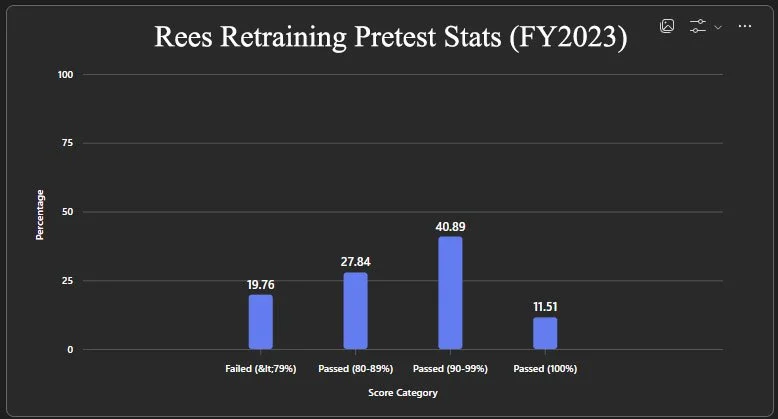
Rees Retraining — The first couple of years we had a full Rees retraining course that workers needed to complete, but after reviewing data and talking to stakeholders, we developed a “pretest” that would give the option of allowing workers prove they were proficient in responding to alarm events and test out of the full course. This reduced retraining from 20 minutes to 7 minutes for most of our pool of 700 learners (233 hours to 81 training hours per year).
The Rees retraining course now consists of two parts:
1. A Rees Pretest
2. The Full Rees retraining
Those that passed the pretest proved they are proficient. Those that failed the pretest would be assigned the full Rees Retraining course. They would need to complete and pass the full Rees retraining course to prove they were competent in responding to Rees alarms. You will find these stats below.